

There is a store I used to shop all the time that did not know me at all after five years of buying things from them. I mean five years. They would send me the welcome email every time I signed up for a sale. The homepage always looked the same to me as it did to every customer. They would suggest products that had nothing to do with what I bought or even looked at. I eventually started shopping at a store and they were able to show me products that made sense to me within two weeks. That is a deal. That is what retail is about right now.
I say that because I think a lot of stores still think of AI as something they can get to later and I want to be clear that they do not have a lot of time to wait. AI in retail is not something that is going to happen in the future. It is happening now. The companies that are using AI well are already doing better than their competitors when it comes to sales, inventory costs and keeping customers.
What I want to talk about in this article is what is actually working with AI in retail and AI in ecommerce now. Not what the companies that sell AI products say is working. Not what you hear at conferences where everything sounds easy and perfect. The real version, where some things work great some things are harder than they seem. The companies that are getting results are the ones that had a clear plan and were realistic about what they could do.
Why Retail Was Always Going to Be an Early User of AI
If you think about it retail was always going to be one of the industries to use AI in a big way. The reason is simple. Retail generates an amount of data all the time. Every time someone clicks on something searches for something looks at a product and does not buy it that is all data. Every time someone abandons their shopping cart returns something uses a loyalty program or buys something during a sale that is all data. Most stores have been collecting this data for years.
They have not had a way to use it in a meaningful way.
AI and machine learning in retail is a technology that finds patterns in large amounts of data and acts on those patterns faster than any human can. That is exactly what retail needs. The business problems that retail faces are things like predicting what products will be popular matching the product to the right customer changing prices based on what competitors are doing and getting products to customers quickly and efficiently. These are not abstract ideas. They are the day-to-day challenges of running a business. AI has been helping to solve these problems for big retailers for years.
What has changed recently is that it is easier for smaller retailers to use AI. You do not have to be a company like Amazon or Walmart to use AI. The tools are available. The infrastructure is in place. What you need is the plan, good data to work with and a team that has experience with AI. AI retail technology has gotten to the point where smaller retailers can access capabilities that used to be available only to the biggest companies.
Personalization: What It Really Means and Where It Fails
Personalization is probably the talked about use of AI in retail but it is also the most misunderstood. When most retailers talk about personalization they mean that they have a widget on their website that suggests products. That is something. It is not personalization.
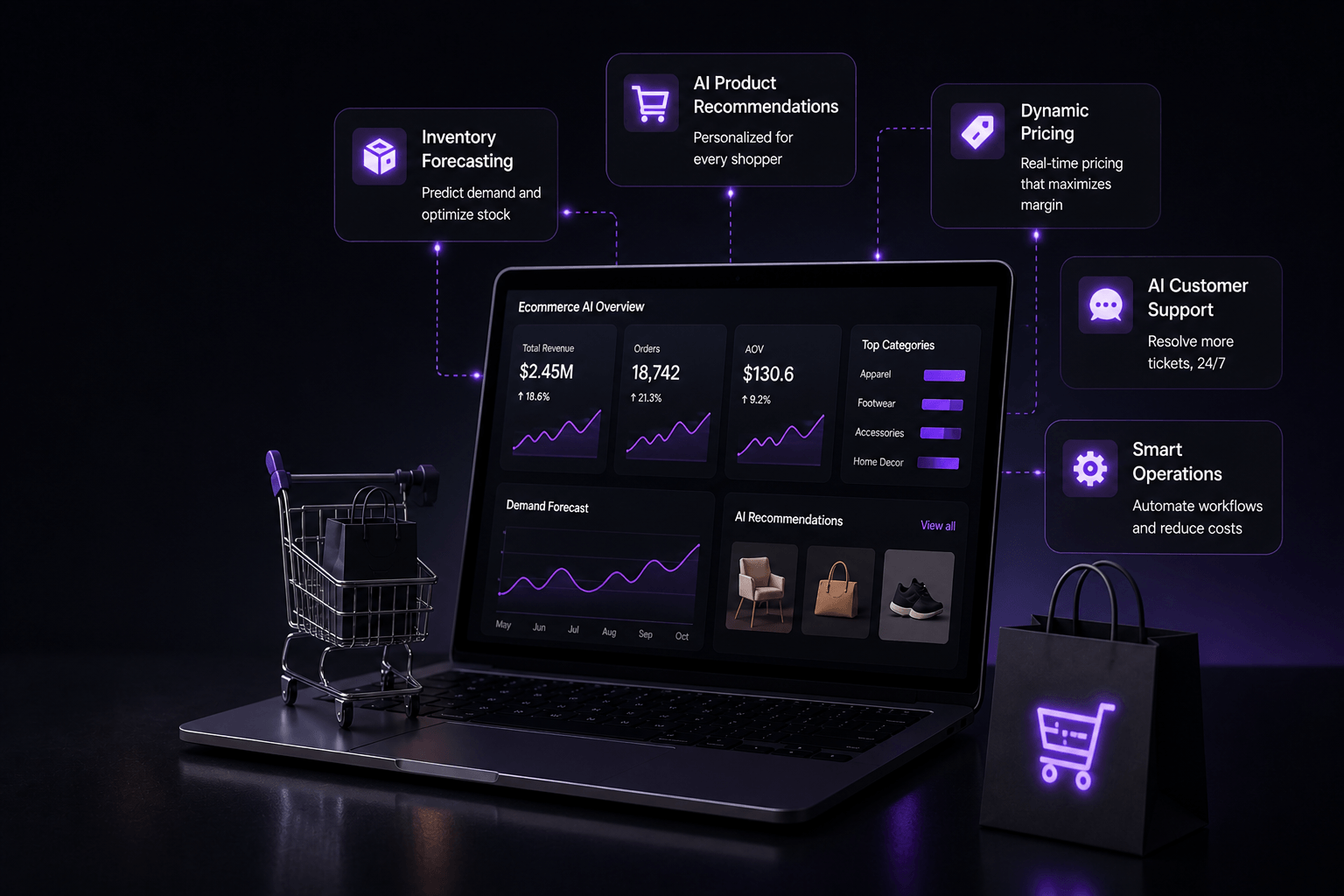
A real AI personalization engine creates a profile of each customer in real time based on what they are doing on the website. It looks at what they’re clicking on how long they are spending in different areas of the site what they are searching for and how their behavior compares to their purchase history. The AI system uses this information to change what the customer sees. It is not just the recommendations widget. It is the website. The homepage, the search results, the promotional banners, the email they get tomorrow.
The companies that are doing personalization well are not just showing customers things they have already bought or things that are of related. They are predicting where the customer is in their shopping journey and showing them what will help them move forward. If someone is just starting to look at running shoes they get content than someone who has bought three pairs of the same brand before. The AI system can tell the difference automatically and continuously.
Where machine learning personalization breaks down is almost always because of data. The AI is only as good as the data it is trained on. If the product catalog is a mess if the customer data is split across systems if the sessions are not connected to purchases then the AI system has nothing to work with. You end up with recommendations not because the AI does not work but because the data is bad.
This is something we see all the time at Resourcifi AI. Companies come to us. Say that their personalization is not working well and nine times out of ten the problem is the data. The data work is not glamorous. It is what makes the AI work.
Demand Forecasting AI: Where the Real Money Is
If I had to pick one use of AI in retail where the return on investment is clearest it would be demand forecasting. Not because it is the exciting thing to talk about but because inventory is where retail margin lives or dies. Most companies are still using methods to forecast demand, which do not work well in a changing world.
Traditional demand forecasting is basically a spreadsheet exercise. You look at what happened year you adjust for seasonality you add in any planned sales and you place your order. It works okay in a world but it falls apart when something unexpected happens. A competitor has a sale a product becomes popular a supplier is late the weather changes. Any of these things can make the forecast wrong in a way that’s expensive to fix.
AI demand forecasting uses a set of inputs. It looks at sales data, seasonal patterns, local events, competitor pricing, social media trends, weather data and economic signals. The model takes all of this information. Makes a forecast that is more accurate than any human could make.
The practical results of getting forecasting right are big. You do not have to carry much extra inventory you do not run out of popular products and you do not have to mark down products at the end of the season. Each of these things directly improves the margin.
Predictive analytics retail applications can also help with planning sales. Of assuming that every sale will increase demand by the same amount the model can predict how demand will respond to a specific sale on a specific product in a specific area. This changes how you plan inventory for sales and reduces the problem of overstocking.
AI Inventory Management: From Reactive to Predictive
Most retail inventory management is reactive. You check the inventory levels and reorder when something is low. You notice that a product is not selling and you mark it down. You find out that a product is out of stock because a customer complains. Each of these things is a failure that has already happened. AI inventory management is about preventing these failures of responding to them.
The big shift that AI enables is from looking at the present to predicting the future. Of watching the current inventory levels and reacting the system is always looking ahead. Which products are starting to get popular which suppliers are taking longer to deliver which seasonal products are about to become popular. The system is always modeling forward.
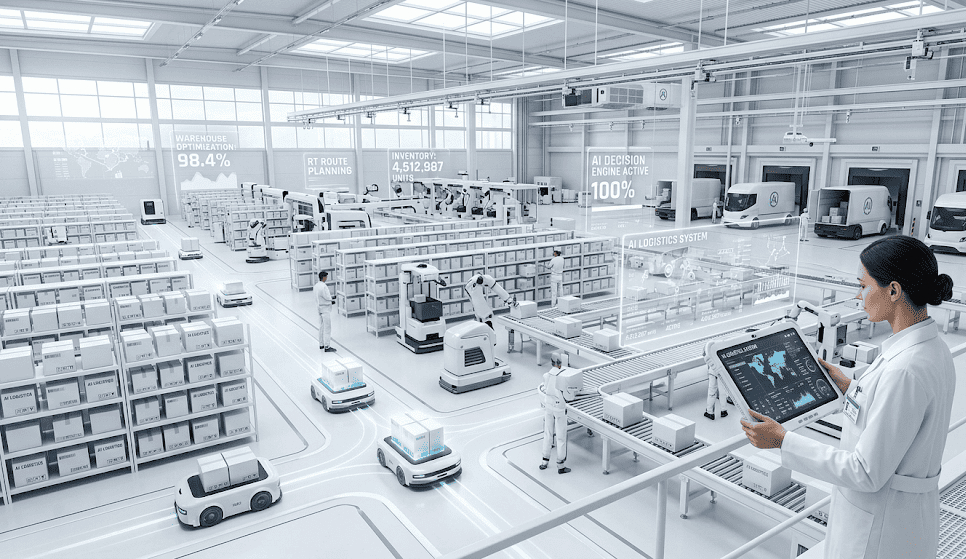
For retailers with locations this becomes even more valuable. Inventory optimization AI can balance stock across all locations. If one location has much of a product and another location is running out the system can recommend transferring the product to the location that needs it. In theory this is possible to do but in practice it is too complicated and does not happen reliably without AI.
On the ecommerce side this logic extends to fulfillment optimization. Which warehouse is best positioned to ship to a given customer, how to batch orders to minimize shipping costs whether to split an order across locations or hold it for a consolidated shipment. These decisions happen thousands of times a day. Each one has a small cost impact. The aggregate impact of making these decisions better is large. Ecommerce machine learning and ecommerce AI makes each of these decisions faster and more accurately than any human could.
Dynamic Pricing AI: What Actually Works
I will talk about dynamic pricing AI. How it actually works. Dynamic pricing is a deal in retail because it can help companies make more money. It is not just about changing prices all the time. It is about using AI to make decisions about pricing.
The companies that are using pricing AI well are the ones that are using it to make smart decisions about pricing. They are using customer behavior AI to look at the competition, understand buying patterns and make pricing decisions based on real data. They are not just changing prices because they think it is an idea. They are changing prices because the data tells them it is an idea.
I think that dynamic pricing AI is something that all retailers should be looking at. It is not just for the companies. It is for any company that wants to make money and be more competitive. It is not just about pricing. It is about using AI to make decisions, about the business.
That is what I want to leave you with. AI is not something that is going to happen in the future. It is something that is happening now. It is something that can help retailers make more money and be more competitive.
Dynamic pricing is something that people often do not understand. When you hear the phrase pricing you might think of ride sharing services raising their prices when it is raining or airlines charging more for tickets on holidays. Dynamic pricing for online stores is different. It is not about taking advantage of customers it is about changing prices based on what’s happening in the market.
Dynamic pricing in stores checks a lot of things all the time. It looks at what your competitors are charging for the same products. It checks how products you have in stock. It sees how many people are looking at your products and how much they are willing to pay. It even looks at how much time left before a product goes out of season. Then it changes the prices to get the result like selling more products or making more money.
The important thing to know about dynamic pricing is that you are in control. You set the rules. The computer follows them. You decide the price you are willing to sell a product for and the highest price you are willing to charge. The computer makes all the pricing decisions within those rules. It does it faster and more often than a person could.
The online stores that are using pricing the best are the ones that think of it as a way to manage their revenue not just a way to lower prices. They use it to respond to what their competitors are doing and to charge more when they can. They use it to get rid of products that are not selling well before they have to lower the price. This is a way of thinking about business and it is working well for them.
Visual search and computer vision are also very interesting. These technologies have improved a lot in a time and they are allowing online stores to do new things. With visual search AI customers can take a picture of a product they like and the computer will find similar products for them to buy. This is helpful because customers do not have to know the name of the product or the brand to find it.
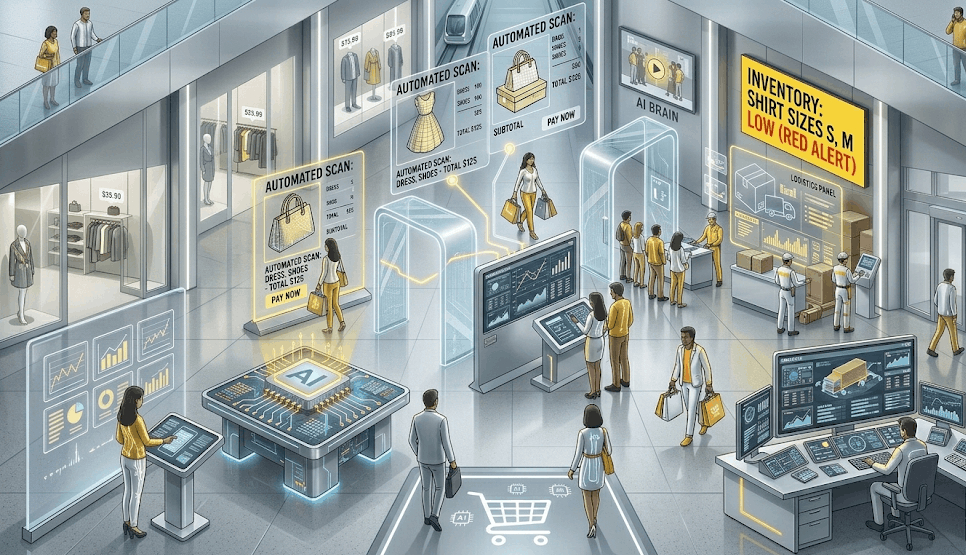
Computer vision retail applications are also being used in stores to track inventory and see how customers are moving around the store. This helps stores to make sure they have products on the shelves and to lay out the store in a way that makes sense for customers. Computer vision is also being used to make checkout faster and easier by using cameras and sensors to track what customers are buying.
On the website side computer vision is being used to make sure product pictures are quality and to get information about products from the pictures. This saves time. Reduces errors. It is also being used to find products that are being sold on the website by comparing pictures of the products to pictures of real products.
AI for online shopping through visual search is still new for many stores but it is becoming more popular every year. It is easier for customers to find what they want when they can show a picture of typing in words.
AI chatbot ecommerce tools are being used to help customers and make their experience better. Many online stores have a lot of customers asking the questions like where is my order or how do I return a product. AI chatbots can answer these questions quickly and accurately without the customer having to wait for a person to respond.
The right way to think about AI chatbots is not that they are replacing human customer support agents but that they are helping to handle the questions so that the human agents can focus on the more complex issues. This means that human agents can spend their time helping customers who have problems like a damaged product or a return that is not straightforward.
Some online stores are also using AI to analyze how customers are feeling and to escalate issues to an agent if necessary. They are also using AI to provide agents with information about the customers order history so that they can help the customer more effectively.
Ecommerce automation is also being used to send messages to customers like a notice that their order has been delayed or a recommendation for a product that they might like. This helps to improve the AI customer experience and build trust with the customer.
Fraud detection is another area where AI is being used. Most customers do not think about fraud detection. That is because it is working well. When a customer places an order the computer checks to see if it is an order or not. If it is not legitimate the order is. The customer does not even know that it happened.
Ecommerce fraud is getting sophisticated and the AI systems that detect it have to keep up. The challenge is that fraudulent orders can look very similar to orders. For example a customer might place an order or use a new account to make a purchase. The AI system has to be able to tell the difference between these orders and legitimate ones. It has to do it quickly.
The AI system looks at signals like the device the customer is using their behavior on the website and the products they are buying. It then gives the order a risk score. If the score is too high the order is declined. The AI system is always getting better so it can detect new types of fraud.
The impact of fraud detection is not just about reducing fraud it is also about reducing false positives. A false positive is when a legitimate order is declined because the computer thinks it is fraudulent. This can be frustrating for customers. It can also lead to lost sales. A good fraud detection system reduces both fraud and false positives, which is good for the customer and the online store.
Many retail AI projects do not work out as planned. The common reason for this is not the technology it is the data. Many companies do not realize how much work it takes to get their data in order so that the AI system can use it. They have product data, customer data and transaction data that is not consistent or complete. This makes it hard for the AI system to work well. It can lead to disappointing results.
To make an AI project work companies need to make sure their data is in good shape. This takes time and effort. It is necessary. They cannot just skip this step. Expect the AI system to work well. If they do they will be disappointed with the results.
The second problem that companies face is scope. Companies see that retail AI solutions can be used in different ways and they try to do everything at the same time. They want to use AI for personalization demand forecasting, dynamic pricing, fraud detection and customer support automation in one project. This creates a project that’s too big and too complicated. It never gets finished or it gets delivered in a way that does not work well with how the business actually operates.
A better approach is to start with one use case. Choose one where the data’s good the business problem is clear and the outcome can be measured. Build that one. Learn from it. Understand what the model does well and where it needs to be improved. Then add things to it. The key is to stay focused at the beginning. This is what separates the retail AI projects that actually work from the ones that look good but do not work well. The third problem is integration. Most retailers are using systems that were not designed to work with AI. They do not work well with the real-time data that AI needs. They are using ERP systems, ecommerce platforms that were built before machine learning was possible and warehouse management systems that are not compatible with modern AI services. To get AI to work well in these environments you need to do some real integration work or have a plan for which systems need to be changed and which can be worked around. If you assume that the AI will just work with the systems you will probably be six months late.
What the Retailers Getting It Right Are Doing Differently
We have worked with retailers and ecommerce companies at Resourcifi AI. The companies that get results have some things in common. They started with a problem, not with the technology. They did not decide to use AI and then look for a problem to solve. They found a problem that was costing them money decided that machine learning was the right tool to solve it and built a solution for that problem. The technology was used to serve the business goal, not the other way around.
They also invested in data infrastructure before they built the AI system. They did not assume that the data would just work itself out. The companies that try to build AI on top of data always end up doing the data work anyway. The ones that got results did the data work first and the AI worked well from the beginning.
They worked with teams that had experience building these systems. Retail AI is not a fully solved problem but it is also not easy. There are patterns and decisions that have already been made. When you work with a team that has experience you are not paying for them to learn on your project. At Resourcifi AI we have worked with different industries, including retail, ecommerce, fintech, healthcare and logistics. This means we can bring a lot of knowledge to the project and make decisions at the beginning.
They also measured the right things. They did not just measure how much traffic was going through the personalization engine or how many AI chatbot sessions there were. They measured business outcomes, like how many products were sold through AI product recommendations compared to products that were not recommended. They measured the cost of inventory before and after demand forecasting. They measured the cost of support before and after they used the chatbot. This is what separates the companies that keep building because they get results from the ones that stop after a year because they do not know what the AI is doing.
Where to Start
If you are trying to figure out where AI fits in your ecommerce business you should start by looking at where you are losing money or where you could be making more money. Look at problems like inventory issues that are causing you to mark down prices or lose sales. Look at customer acquisition costs that are high because you are not keeping customers. Look at support costs that are going up with every order. Look at conversion rates that are lower than they should be. Each of these problems could be solved with AI and the right place to start is the one that will have the impact on your business.
Before you start you should ask yourself some questions. Do you have the data you need to make this work and if not how will you get it? Do you have the people and skills you need to operate and improve the AI system or do you need a partner to help you? How will you know if it is working and what will you measure to determine if it is successful? And be honest with yourself is AI really the solution for this problem or is there a simpler way to solve it?
Not every problem in retail needs machine learning. Some problems need processes some need better data and some need a new platform that has nothing to do with AI. If you are clear about what you need before you start you will save yourself a lot of time and money.
When AI is the answer the quality of the implementation matters a lot. The same problem can be solved in ways and the choices you make can have a big impact on how well it works. The team that builds it matters as much as the technology.
At Resourcifi AI we have worked with retailers and ecommerce companies on all kinds of AI projects. We have built personalization systems demand forecasting and inventory optimization systems, dynamic pricing systems, fraud detection systems and customer experience automation systems. If you are trying to figure out where AI fits in your business or if you have an AI project that is not working the way you wanted it to we would be happy to talk to you about it. We will not try to sell you anything we just want to have a conversation, about what the problem is and how to solve it.