

I had a call with the founder ofa mid-size ecommerce brand last week. This brand is direct-to-consumer they make about 40 million dollars in revenue and they have a solid product line. She told me something that has been on my mind since. She said “We have 47 people and it feels like we need 90 to keep up with what we are already doing. Forget about growing.”
This is not her problem. I have been hearing this from ecommerce teams. They are stretched past their limit and it is not because they are doing a bad job. It is because running a retail business in 2026 is just too much work. There are many products to price. Many customers to try and personalize for. Support tickets are piling up. Inventory decisions are tough. There are a million little operations tasks that someone has to do manually even though they follow the same pattern every time.
This is whyAI in ecommerce is becoming so popular. It is not because tech companies are convincing everyone to use it. It is because ecommerce operators are looking at their teams and their margins and saying “something has to change because this is not working anymore.”
We have been working with ecommerce businesses at Resourcifi.ai building AI for them. We have done over 600 projects. I can tell you that the difference between companies that use AI well and those that do not is getting bigger every quarter. So I wanted to share what we have learned about what works and what does not and where ecommerce businesses should start with AI.
What Does AI Do in Ecommerce
I do not need to explain what AI is. You already know. What you want to know is what AI does in an ecommerce business that makes things better.
Let me walk you through it.
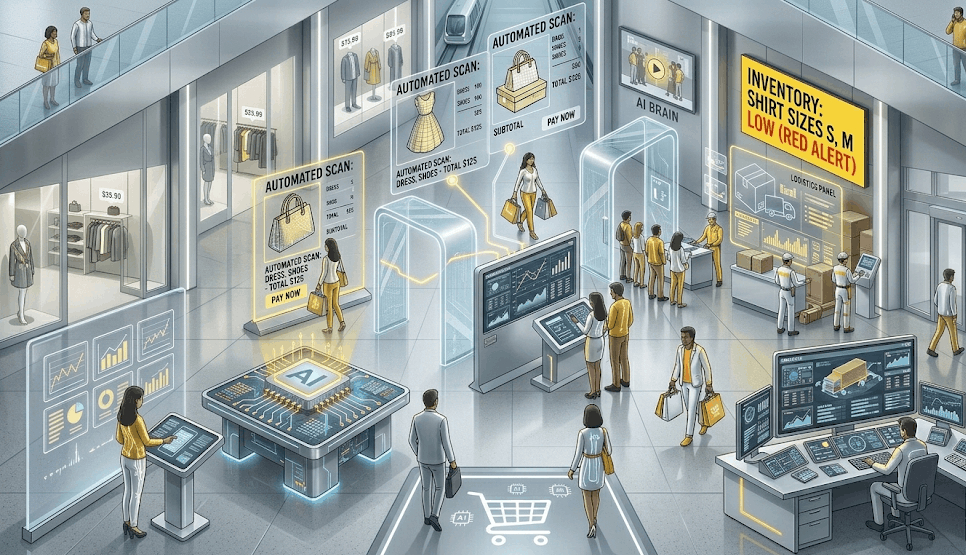
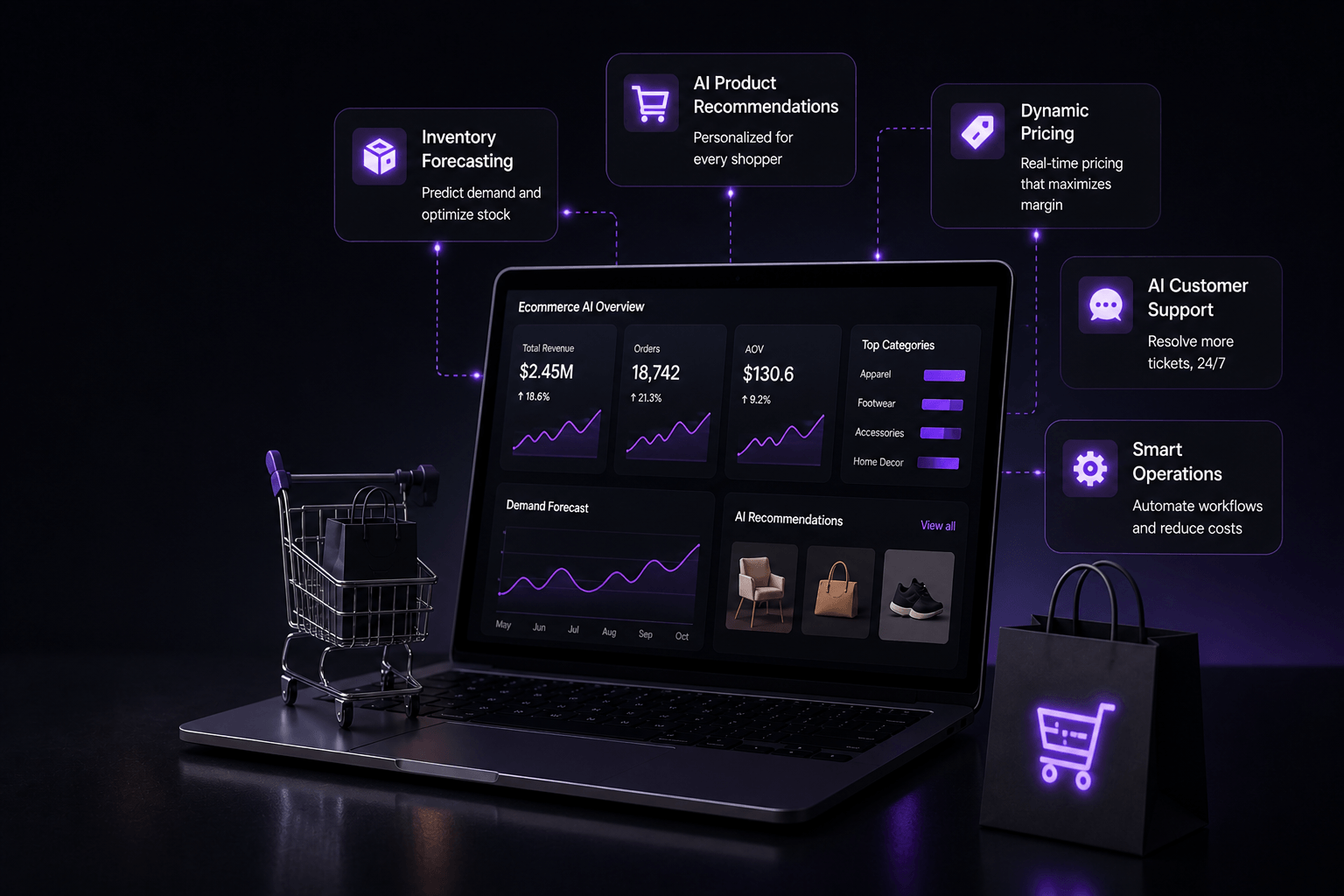
- Product discovery is broken. Most ecommerce sites show everyone the products. Ai product recommendations are different. They look at each person individually. What did they browse? What did they search for? What did they add to cart. Then bail on? What have they bought before. At what price points? What time do they usually shop? Are they on their phone or laptop?
The AI figures out what this one person probably wants now. Not what customers in general want. What this person wants today. I saw this in action for an ecommerce client last year and the difference was immediate. People found stufffaster. Carts got bigger. More people came back. It was not magic. It was just showing people what they want instead ofthe same generic stuff everyone sees.
- Inventory is a guessing game. Every ecommerce operator I talk to has a horror story about inventory. They ordered too much ofsomething and it sat in the warehouse forever. Their best seller ran out right when demand spiked. Traditional forecasting looks backward. It checks what happened last year adjusts a little and hopes for the best. AI demand forecasting is different. It looks at what’s happening right now. Not just sales data. Site traffic patterns what people are searching for social media buzz, competitor price changes, seasonal stuff. It picks up on momentum shifts weeks before they show up in revenue.
AI inventory management is not perfect. It gets you close enough that the really expensive mistakes happen way less. You know, dead stock eating up your cash. Stockouts on the thing everyone wanted. For a business running on ecommerce margins that difference is real money.
- Pricing is tough. Everyone in ecommerce knows they should be more dynamic about pricing. Actually doing it? Across your catalog? When competitors are changing prices every five minutes and demand is shifting constantly? Nobody has time for that. AI dynamic pricing just handles it. It watches competitor prices tracks demand for each product knows your inventory levels and your margin floors and makes adjustments continuously based on rules you set up.
The first question every business owner asks us is “am I giving up control?”. The answer is no. You are giving up the work. The control stays with you. You set the guardrails. You see every change. Why it happened. That is the point.
- Support tickets are never ending. Your business grows. Your ticket volume grows right along with it. Ifwe are being real, like 80% ofthose tickets are the same ten questions asked in slightly different ways. Where is my order? Can I return this? What size am I? Do you ship here? AI customer service ecommerce can handle all that routine stuffend to end. Not just a basic AI chatbot ecommerce thing that matches keywords to canned answers. A real system that is connected to your orders and your product catalog and actually resolves stuff. Checks tracking. Processes the return. Recommends sizing based on what the customer bought before. Done in like a minute.
So your support people stop spending all day on questions and actually get to focus on the hard stuff. The angry customer who needs someone to really listen. The weird technical issue. The VIP who deserves a personal touch. That is where humans shine and that is what they should be doing.
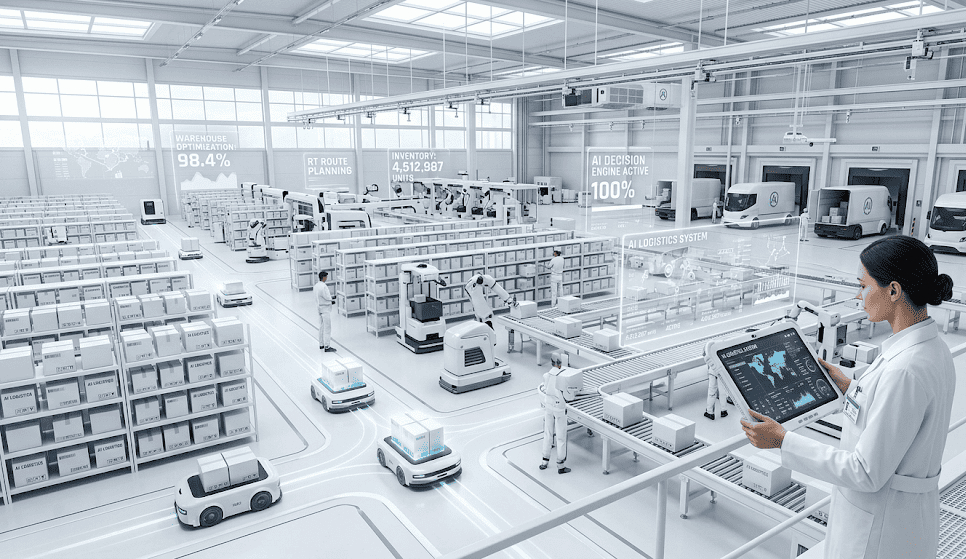
- Operations are boring but important. Order routing, returns, fraud checks, supplier stuff moving data between systems. It is not sexy at all. It is where a huge chunk ofyour teams time disappears every day. AI order management automates the decisions. Best fulfillment center for each order based on where stuffis. Fraud detection that looks at patterns instead ofblunt rules that flag halfyour legitimate customers. Returns that process themselves when they meet the policy. On the supply chain side AI supply chain ecommerce means
your system is actually watching supplier performance and can flag issues before they become your problem.
None ofthis will ever make a conference keynote. It saves real money and real time. Honestly the operations stuffoften has the fastest payback because it touches every single order that comes through. This is ecommerce automation doing the important work.
- Marketing that does not annoy people. You are running email and social and SMS and retargeting and loyalty programs. Trying to keep all ofit relevant and it is basically impossible with manual segmentation. AI powered ecommerce marketing just treats every customer as their segment. What they get. When they get it and through which channel is all based on how they actually behave. One person gets a product email at 7am because that is when they read email. Someone else gets a text about a flash sale Saturday afternoon because that is when they shop.
That level ofecommerce personalization is really what makes someone go from a one-time buyer to a repeat customer. Not because you are hitting them with messages. Because the messages you do send actually matter to them. Big difference.
Where This Goes Wrong
I want to be real about this part because I have watched a lot ofecommerce companies blow money on AI that did not deliver. It is almost never because the tech was bad. It is always about how things got set up.
The biggest mistake is starting with “we need AI” instead ofstarting with a problem. AI ecommerce solutions work when they are solving something. Like “our demand forecasting sucks. It is costing us real money” or “our support team literally cannot keep up.” Start with the pain. Not the technology.
Second biggest mistake is data. AI for ecommerce business lives and dies on your data. Product catalog, customer records order history, inventory. Ifthat stuffis messy or spread across a bunch ofsystems the AI is working with a broken picture. Bad data in means bad decisions out. I know that sounds obvious but you would not believe how many projects we have seen crash into this wall.
The third mistake is going generic when you need custom. Every ecommerce business is different. Your catalog, your customers, your margins, your fulfillment setup. Custom AI ecommerce solutions get built around your business. Generic off-the-shelf tools treat everyone the same way. The results show it.
The last mistake is picking a partner who knows AI but has never actually worked in ecommerce. Building this stuffrequires knowing both sides. You need someone who gets what messy product data looks like and what peak season pressure feels like and how returns actually flow through operations.
At Resourcifi.ai we have built AI across ecommerce and five other industries, over 600 plus projects. We know the tech. We know the business side. That combo matters more than most people realize.
How to Start Without Overcomplicating It
Pick one thing that really bothers you about your ecommerce business. One thing. Is it the problem that keeps you up at night or the one that your team will not stop complaining about? For most ecommerce businesses it is either customer support or product recommendations or inventory management. All three ofthese things have clear ways to measure improvement. Pick the one that hurts the most and start with that one.
Before you start building anything take a look at your data. You do not need it to be perfect. You need to know what you have. Is your product catalog clean and consistent? Is your customer data in one place. Is it scattered everywhere? Do you have a sales history? Your development partner can work with data but they need to know the situation upfront.
Find a partner who has actually built and shipped ecommerce AI into production. Not just demos, but real systems with real customers and real consequences when something breaks. Ask for ecommerce case studies. Ask what went wrong on past projects. Ask how they handle platform integration. You will figure out quickly whether they have actually done this before or not.
And look your first version is not going to be perfect. That is fine. Seriously that is fine. Just get it live. Watch how it performs with real customers. Then make it better. The best ecommerce AI systems we have ever built started out good. Got great over the following months because we kept watching and tweaking.
At Resourcifi.ai we get to deployment in 90 days on average. We start focused and expand from there. Our clients come back to us 95% ofthem because we build things that actually work and we stick around to make sure it keeps working. Ifyou are wondering how to use AI in ecommerce for your situation that conversation is where it all starts.
Questions We Get Asked a Lot
Ecommerce AI use cases include product recommendations, inventory forecasting, dynamic pricing, customer service, fraud detection order management and marketing personalization. Those are the ones. Most people start with one or two. Add more once they see what happens with ecommerce AI.
Regular automation follows rules you set up. For example cart abandoned send this email. Stock low reorder this much. Ecommerce AI actually thinks about context. The abandoned cart email goes out at the time this specific customer is most likely to open it with the product they’re most likely to want at a discount that is calibrated to them specifically. That reasoning layer is the difference between ecommerce AI and regular automation.
It depends on what you’re building. Something focused usually takes 4 to 8 weeks. Something more complex is more like 8 to 16 weeks. At Resourcifi.ai we get to deployment in 90 days on average even for the complex ecommerce AI stuff.
No we integrate with whatever you have. Shopify, Magento, WooCommerce custom builds, enterprise platforms, whatever. Ecommerce AI connects through APIs so no migration is needed.
It depends on scope and complexity. At Resourcifi.ai we can deliver at up to 70% cost savings compared to US-based agencies because of our distributed team structure. The best way to get a number is to just talk to us about your ecommerce AI situation.
Yeah, totally. You do not need a massive budget or a data science team anymore. You need data, a clear problem and a partner who builds at the right scale for where you are with ecommerce AI. Some of the most impactful projects we have done were for mid-size ecommerce companies, not enterprise giants. AI for ecommerce is not just for the big players anymore.
If your team is making decisions on gut feel that should be based on data you are ready for ecommerce AI. If your support inbox is the same ten questions on repeat every single day you are ready. If competitors are personalizing their experience and you are still showing everyone the same thing you are ready. If inventory planning feels like gambling you are ready. The real question is not are you ready it is which problem do you tackle first with ecommerce AI.
What Now
Look ecommerce AI is not about impressing anyone with fancy technology. It is about fixing the stuffthat is limiting how fast you can grow. The inventory guesswork, the support bottleneck, pricing that never gets the attention it needs marketing that treats a million people like they are all the same person, operations that eat your team alive. Ecommerce AI can help with all ofthese things.
The ecommerce businesses growing fastest now figured this out. They are not working harder than everyone else they are using ecommerce AI to handle the work that frankly should not need a human in the first place. The gap between them and everyone else just keeps getting wider.
At Resourcifi.ai we have been doing this for over a decade now. Building production-ready ecommerce AI for online retail businesses and companies across five other industries. Our clients come back 95% ofthem because we build things that actually deliver and we do not disappear after launch.
Ifany ofthis hit home and you want to talk about what ecommerce AI could do for your ecommerce business I am genuinely happy to have that conversation. No deck, no sales pitch, an honest look at where you are and what would actually make sense.