

Here is something worth thinking about honestly. Not next quarter. Not when the board brings it up. Right now.
How much of your team’s time is being burned on work that a well-built AI agent could handle better, faster and without getting tired at 3pm on a Thursday?
If you are honest about it, the answer is probably uncomfortable. Entire departments are still doing repetitive, multi-step work that involves pulling information from one system, making a decision based on that information, taking action in another system and then logging what happened somewhere else. That is not strategic work. That is process work. And in 2026 there is no good reason a human should be doing it.
That is why AI agent development has become the most important conversation in enterprise technology this year. Not AI in general. Not chatbots. Not copilots. Specifically AI agents.
Systems that can actually reason, plan and take action across your business without needing someone to hold their hand through every step.
At Resourcifi.ai we have been building these systems for years now. Over 600 projects delivered. More than a decade of engineering complex software. And a growing focus on autonomous AI agents that do real work in real production environments. So when we put together this AI agent development guide for 2026 it is not based on theory or trends we read about. It is based on what we have actually built, deployed and maintained for businesses across SaaS, fintech, healthcare, legal and ecommerce.
Whether you are a CTO evaluating AI agent architecture for the first time, a founder researching AI agent use cases for your product, or a business leader trying to understand if building AI agents for business is the right move this year, this guide will give you everything you need to make a confident decision.
What Are AI Agents and Why Should You Care?
There is so much noise around this topic that it helps to get really clear on what we are actually talking about.
An AI agent is a software system that can understand a situation, decide what needs to happen and then go do it. Not wait for a human to tell it what to do step by step. Not follow a rigid script that breaks the moment something unexpected happens. It actually thinks through the problem and takes action on its own.
The key word there is action. That is what separates AI agents from everything that came before them. A traditional automation tool can move data from point A to point B when a specific trigger fires. That is useful but it is limited. The moment something falls outside the predefined rules the whole thing stops.
An AI agent handles the unexpected. It reads a customer support ticket and understands not just the words but the intent behind them. It checks the customer’s account history. It decides whether this is something it can resolve or something that needs a human. If it can resolve it, it takes the right steps across whatever systems are involved. CRM updates. Refund processing.
Follow-up scheduling. Email responses. All of it handled in one seamless flow.
That is what makes AI agents for business fundamentally different from chatbots, automation scripts or even the AI copilots that were popular last year.
The AI Agent vs Chatbot Question
This comes up in almost every conversation we have with new clients so let us put it to rest.
A chatbot is a conversational interface. You type something in. It gives you an answer back. Even the most advanced chatbots built on top of large language models are still doing the same basic thing. They are reacting to your input with a response. They are not going out and doing things in the world. They are not making decisions about what tools to use. They are not executing multi- step workflows across your tech stack.
An AI agent does all of that. It is proactive instead of reactive. It reasons instead of pattern matching. It uses tools instead of just generating text. And when something goes wrong it adapts and tries a different approach instead of just failing or escalating.
Here is how they compare in practical terms:
| What you are comparing | Chatbot | AI Agent |
| How it works | Waits for your question, gives an answer | Assesses the situation, decides what to do, does it |
| How it makes decisions | Matches your words to stored responses | Reasons through the problem step by step |
| What tools it uses | Usually just its own interface | CRMs, databases, APIs, payment systems, email, calendars and more |
| Can it handle complex multi-step tasks | No | Yes, this is what it is built for |
| How much human oversight it needs | A lot | Minimal once properly set up |
| What happens when something unexpected comes up | It fails or asks you to rephrase | It adapts its approach and tries another way |
When businesses come to us and say they want AI agents for business operations they are not asking for a better chatbot. They are asking for software that can own entire workflows from beginning to end. That is a fundamentally different thing.
Why 2026 Is the Year This Becomes Real
AI agents are not new as a concept. Researchers have been talking about them for years. But there is a reason they are suddenly everywhere in business conversations right now. Several things changed at the same time and the combination is what made this the moment.
The Models Got Smart Enough to Be Trusted
Two years ago asking an AI to reason through a multi-step business process was basically a coin flip. You might get something useful. You might get nonsense. Now models from OpenAI, Anthropic, Meta and others handle complex reasoning at a level that genuinely was not possible back then.
This matters because reasoning is the foundation of every AI agent. If the model cannot reliably figure out what to do next the entire agent falls apart. Now that the reasoning layer is solid enough to trust, everything else becomes possible.
These Models Can Now Actually Do Things
It is not enough for a model to think well. It also needs to act. And modern LLMs can now interact with external tools, APIs and databases natively. They can pull customer records from Salesforce. Update a ticket in Jira. Send a message through Slack. Process a payment through Stripe. Trigger a workflow in your internal systems. All through natural language instructions. This is what unlocks AI agent workflow automation at a real scale. The agent does not just decide what should happen. It goes and makes it happen. Across whatever systems need to be involved.
The Building Blocks Are Production Ready
The ecosystem around AI agent development matured fast. Frameworks like LangChain, LangGraph, CrewAI and AutoGen gave developers solid foundations to build on. Vector databases for long-term memory hit production quality. Monitoring and observability tools specifically designed forAI agents became available. The infrastructure to build production readyAI agents exists now in a way it simply did not two years ago. But here is an important distinction. The barrier to building an AI agent dropped. The barrier to building one that works reliably in production, at scale, with real users and real data, that barrier is still high. That gap is where most projects fail.
Businesses Stopped Asking “What Is AI” and Started Asking “How Do We Use It”
The education phase is over. Decision makers understand what AI can do. They have seen the demos. They have read the case studies. Now they want to know specifically how to implement it in their operations. Autonomous AI agents are the most compelling answer because they do not just inform or recommend. They actually take action and get things done.
What AI Agents Are Doing for Businesses Right Now
You can read about AI agents in theory all day but what actually matters is what they do in the real world. Here are the AI agent use cases we see delivering real measurable value right now. Not experiments. Not pilots. Production systems running every day for real businesses.
Customer Support That Resolves Instead of Deflects
This is the most proven use case and usually the best place to start. But let us be clear about what we mean. We are not talking about a chatbot that sends people to a help article and hopes for the
best. A properly built AI agent for customer support reads the ticket or message and actually understands what the problem is. It pulls up the customer’s account. Checks their history. Walks through troubleshooting in a way that makes sense for their specific situation. If the issue needs a refund it processes the refund. If it needs escalation it writes up a complete summary and hands it to a human so the customer does not have to repeat themselves. We have built customer support agents that significantly reduce the volume of tickets needing human attention while keeping customer satisfaction scores high. This is consistently one of the best AI agent use cases for companies looking for quick, measurable ROI.
Sales Teams That Spend Their Time Selling
How much of your sales team’s day is actually spent talking to prospects? For most teams the answer is embarrassingly low. The rest is research, data entry, scheduling, follow-ups and CRM updates. An AI sales agent handles all of that. It researches the prospect’s company. Checks how well they match your ideal customer profile. Writes personalized outreach based on their specific situation. Schedules meetings. Runs nurture sequences. The salespeople on your team get to focus on the conversations that actually close deals instead of drowning in admin work.
Finance Operations That Never Miss a Step
In fintech and enterprise finance AI agents are running invoice processing, expense report reviews, financial report generation, transaction anomaly detection, vendor payments and compliance monitoring. The thing that stands out is consistency. AI agents do not get tired on a Friday afternoon. They do not skip steps when they are busy. They do not miss the anomaly buried on page forty-seven of a report. They just execute the process the same way every single time.
Healthcare Admin Without the Burnout
Healthcare is drowning in administrative work. Scheduling. Insurance verification. Records management. Billing. Patient follow-ups. Compliance documentation. AI agents are helping healthcare organizations take a real chunk of that burden off their staff while keeping the patient experience smooth and maintaining full HIPAA compliance.
Legal Work at a Fraction of the Time
Contract review. Legal research across case law databases. Document drafting. Due diligence. Compliance monitoring. Client intake. AI agents in legal settings can dramatically reduce the time spent on document heavy work. We are talking about tasks that used to take lawyers weeks getting done in days. That frees them up for the strategic thinking and client relationships that actually require a human mind.
Ecommerce That Runs Smarter
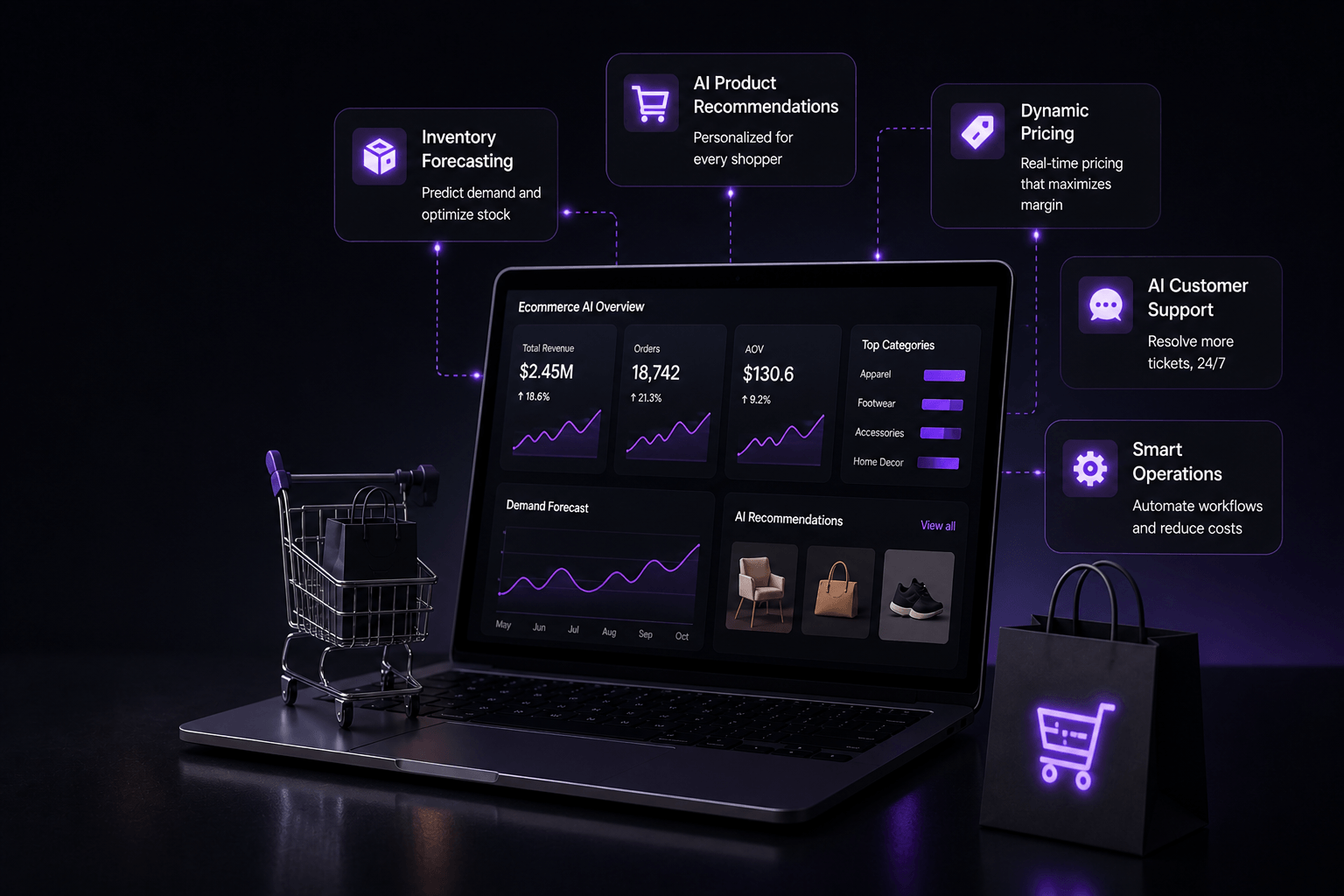
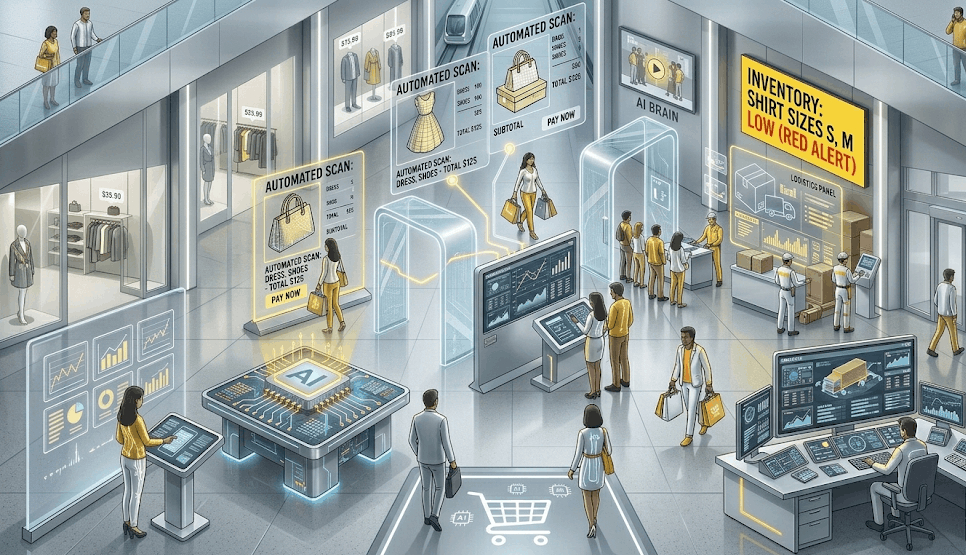
Product recommendations. Demand forecasting. Inventory management. Order tracking. Returns processing. Dynamic pricing. Supplier management. AI agents are plugging into every stage of the ecommerce value chain and making each piece run more efficiently. Some of the more advanced setups use multi-agent systems where separate agents handle pricing, inventory and customer communication as a coordinated team. For online retailers operating at scale this is not a nice-to-have anymore. It is how you stay competitive.
The Internal Operations Nobody Notices Until They Are Fixed
This might be the most underrated use case of all. AI agents quietly handling IT helpdesk tickets, employee onboarding workflows, knowledge base maintenance, meeting preparation, report generation and cross-system data syncing. All of this is AI workflow automation that saves hours of work across every department in the company. It usually delivers the fastest ROI precisely because it touches everything.
How to Choose the Right AI Agent Development Company
If you are going to work with a partner on AI agent development, this decision matters more than almost any technical choice you will make. The wrong partner will cost you months of time, significant budget and probably leave you with something that works in a demo but falls apart in production. Here is what to actually look for when choosing an AI agent development company.
They Have to Have Real Production Experience
This is the biggest filter and honestly where most companies do not make the cut. Building a demo AI agent that works in a controlled environment is not hard. Getting an agent to work reliably in production with real users, real data, real edge cases and real consequences when things go wrong is an entirely different challenge. Ask for case studies. Detailed ones. Ask about error rates. Ask about uptime. Ask what went wrong and how they handled it. If all they can show you is prototypes and proof-of-concept projects, that tells you they have not crossed the gap into real production delivery yet.
They Need Genuine Technical Depth
AI agent development is not just about being good at prompting language models. It requires deep expertise across LLMs, prompt engineering, software architecture, system integration, security and infrastructure. Your partner needs to be genuinely strong across all of these areas. Not a language model specialist who outsources the engineering. Not a software shop that just started experimenting with AI. A team that can go deep on every layer of the stack.
They Cannot Be Locked into One Vendor
The AI landscape changes fast. A company that only works with OpenAI or only uses one framework is making your technology choices based on their familiarity, not your best interests. You need a partner with a tech-agnostic approach who evaluates all the options and picks what genuinely fits. OpenAI, Anthropic, open-source models, custom fine-tuned solutions. The right answer depends on your specific use case and a good partner will find it.
AI Agent Integration Has to Be a Core Strength
AI agents do not exist in a vacuum. They need to plug into your CRM, your ERP, your internal tools, your databases, your communication platforms. The AI agent integration piece is where a huge number of projects hit walls. APIs behave unpredictably. Data formats differ between systems. Authentication is complex. Legacy systems sometimes have no documentation at all. Your partner needs to have been through this many times before.
They Need to Communicate Like Real Partners
AI projects involve real uncertainty. Timelines shift. Models behave in ways nobody expected. Edge cases appear that were not in the requirements. A good partner does not hide from this. They tell you the truth. They give honest timelines. They flag problems early. They keep you informed without you having to chase them.
They Have to Stay After Launch
Deploying an AI agent is not the finish line. It is the starting line. Production agents need ongoing monitoring, regular iteration, prompt tuning, new tool additions and sometimes model swaps as better options come along. A partner who disappears after launch day is not a partner at all. Look for companies built around long-term relationships, not one-off project delivery. At Resourcifi.ai this is how we have operated since day one. With 10 plus years of experience, over 600 projects delivered, a 95% repeat client rate and a 4.9 rating on Clutch, we have earned the trust of businesses who demand production-readyAI agent solutions. That repeat rate is not an accident. It exists because we deliver systems that work and we stay in the relationship to make sure they keep working.
Frequently Asked Questions About AI Agent Development
Timeline depends entirely on complexity. A focused agent handling a single workflow with limited integrations typically takes 4 to 8 weeks. Agents that manage multi-step processes across several systems run 8 to 16 weeks. Full multi-agent systems where multiple specialized agents coordinate together can take 12 to 24 weeks. At Resourcifi.ai our average time to first deployment is 90 days even for complex projects.
Autonomy and action. That is what it comes down to. A chatbot responds to what you say. An AI agent figures out what needs to happen, selects the right tools, executes multi-step tasks and adapts when things do not go as planned. The AI agent vs chatbot distinction is simple. A chatbot talks. An AI agent works.
Yes and this is a critical part of the value. Modern AI agents integrate with CRMs, ERPs, communication platforms, databases, payment processors, project management tools and custom internal APIs. AI agent integration is a foundational piece of the AI agent architecture we design for every project. The agent is only as useful as the systems it can reach.
For straightforward generic tasks off-the-shelf tools can work fine. But here is the thing. for anything specific to your industry, your workflows or your data, custom AI agents will dramatically outperform a generic solution. Custom agents are built around how your business actually operates. That specificity is what drives real results versus a tool that technically works but never quite fits.
Honestly the list keeps growing. We see strong ROI across SaaS, enterprise, fintech, healthcare, legal and ecommerce. But the real qualifier is not industry. It is workflow complexity. Any business with repetitive, data-heavy processes that span multiple systems and require decisions along the way is a strong candidate forAI agent development. If your people are spending hours on work that follows a pattern, an agent can probably handle it.
Here is what we tell everyone who asks us this. Focus on what actually predicts success. Production experience with real deployed systems. Deep technical capability across the full stack. A tech-agnostic approach to models and tools. Proven AI agent integration skills with complex technology environments. Transparent communication throughout the project. And a commitment to long-term support after deployment. A 95% repeat client rate like ours at Resourcifi.ai tells you a company delivers consistently enough that clients choose to come back.
Where to Go from Here
AI agent development is not a trend that might be important someday. It is one of the most significant opportunities available to businesses right now in 2026. The technology is ready. The use cases are proven across industries. And the companies that are moving on this now are building a real competitive advantage over those still thinking about it. But the difference between a successful AI agent project and a failed one almost always comes down to execution. Clear goals. Smart architecture. A disciplined development process. And most importantly a partner who has actually done this before and understands what productionready means in practice, not just in a pitch deck. At Resourcifi.ai we have spent over a decade building complex systems and the last several years focused specifically on production-readyAI solutions. We have delivered autonomous AI agents across SaaS, enterprise, fintech, healthcare, legal and ecommerce. Our clients come back again and again because we build things that actually work and because we treat every engagement as a genuine partnership.
If you want to explore what AI agents could do for your business we are happy to have that conversation. No sales pitch. No pressure. Just an honest look at where AI agents fit in your world and what it would take to build them right. Book a free discovery call with our team to get started
About Resourcifi.ai: Resourcifi.ai is an AI agent development company that builds production ready AI solutions including AI agents, RAG systems, custom LLMs and workflow automation for businesses across SaaS, enterprise, fintech, healthcare, legal and ecommerce. With 10 plus years of experience and 600 plus projects delivered, we are trusted by companies who demand AI that works.